EU Parcel Fee 2026: What Irish Sellers Need to Know
The EU parcel fee 2026 adds €2 to low-value parcels entering the bloc from November 1. See the cost for Irish shops importing stock or competing on price.
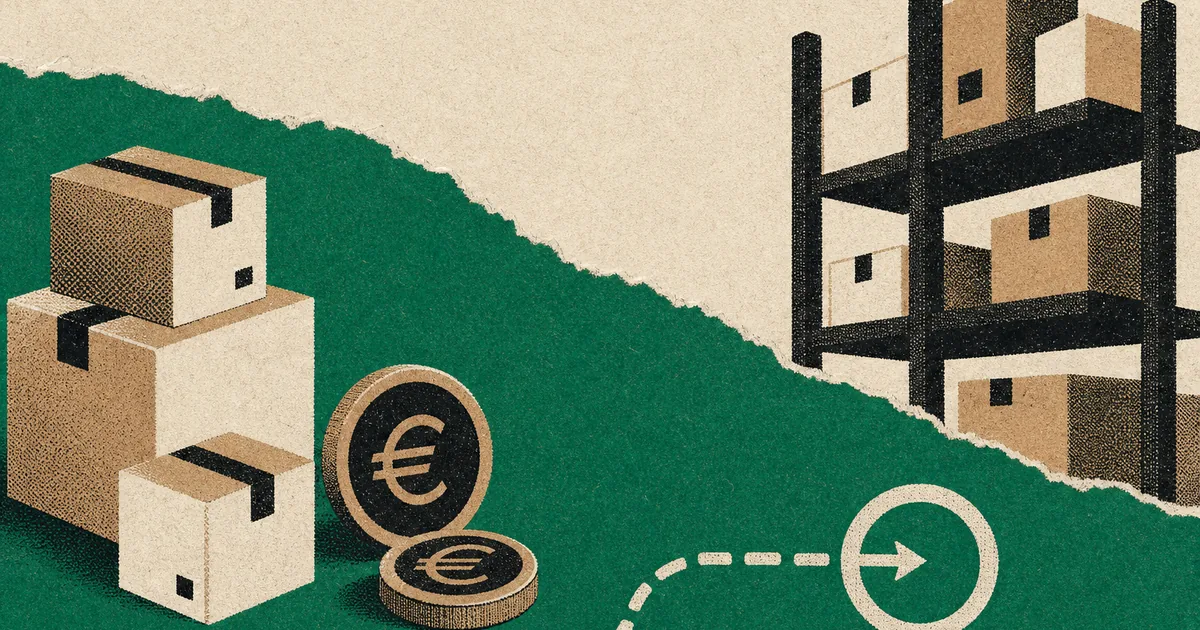
The EU parcel fee 2026 adds €2 to low-value parcels entering the bloc from November 1, following a €3 charge introduced in July. For an Irish seller importing stock or competing with low-value imports from outside the EU, the practical effect is a higher landed cost on each affected parcel. The European Commission estimates the measures could raise €6 billion a year between 2028 and 2034.
What is the EU parcel fee 2026?
The European Commission's customs measures add an extra €2 to low-value parcels entering the EU from November 1. That follows a €3 charge introduced in July, so sellers need to treat the changes as part of a wider shift in the cost of cheap imports.
The important wording is "entering the EU". This is not a general €2 increase on every parcel sent by an Irish shop. The clearest exposure is for goods arriving from outside the bloc, and for businesses competing with those low-value imports.
The Commission estimates that the measures could raise €6 billion a year between 2028 and 2034. The published account of the estimate gives the wider context, but the decision point for a small shop is simpler. An extra €2 has to land somewhere in the product or fulfilment cost.
How much could €2 add to an Irish shop's costs?
The following examples assume every parcel in the stated monthly volume is affected by the additional €2 fee. They are planning figures, not a claim about how many parcels any EirPost customer sends.
| Affected parcels each month | Extra cost each month | Extra cost each year |
|---|---|---|
| 50 | €100 | €1,200 |
| 150 | €300 | €3,600 |
| 400 | €800 | €9,600 |
At 50 affected parcels, the fee adds €100 each month. At 150 parcels, it adds €300. A shop handling 400 affected parcels faces €800 a month under the same assumption.
The annual figures show why a small per-parcel charge deserves attention. The monthly amount may fit inside a busy dispatch budget, while the yearly amount can change the margin on low-priced products. The calculation does not include the earlier €3 charge, product cost, VAT, storage, returns or any carrier charge.
Which Irish sellers face the clearest exposure?
The direct exposure is clearest for an Irish business importing stock from outside the EU. A shop buying low-value components, packaging, accessories or finished products may see the landed cost rise when those goods enter the bloc.
A second group is exposed through competition. A seller shipping from Ireland may be competing with a low-value parcel that enters the EU from outside it. If that parcel becomes €2 more expensive, the price gap may narrow. That can help an Irish shop, but it does not remove the need to price products carefully.
The effect depends on the product and the order. A €2 charge is a larger share of a low-priced item than of a high-priced one. It also matters more when the customer is comparing several near-identical products and delivery is already shown as free.
For a seller posting from Ireland, the EU measure should not be treated as an automatic €2 change to every domestic or intra-EU label. The relevant question is where the goods originate and which parcels enter the EU from outside it.
Will the fees change where platforms store goods?
The Commission's estimate of €6 billion a year between 2028 and 2034 points to a large commercial incentive, not just a customs line on a parcel. Platforms and fulfilment businesses are already being encouraged to expand local warehousing.
In practice, local warehousing can move stock into the EU before an individual customer order is dispatched. That may change the customs position for the final delivery, although the seller still has to account for storage, handling, replenishment and returns.
For an Irish shop, the useful distinction is between importing one order at a time and importing stock in batches. The first model can expose each low-value order to the new €2 amount. The second may replace repeated parcel movements with a warehousing bill and a different stock plan.
Neither model is automatically cheaper. A warehouse does not remove product cost or fulfilment cost. It changes when and where those costs arise. The €2 figure makes that comparison worth doing for products with thin margins.
What should an Irish seller do before November 1?
Put the €2 figure into the cost model for affected imports. Use the EirPost shipping calculator to compare rates by destination and weight for the delivery side, then use the EirPost pricing plans page to understand label costs separately.
Keep those two parts separate. The EU measure concerns low-value parcels entering the bloc from outside it. A label for an Irish-to-EU shipment is a different cost question, so combining both figures into one unexplained surcharge can give customers the wrong price.
For a product with 50 affected imports a month, the added fee is €100 under the assumption above. At 150 parcels it is €300, and at 400 it is €800. Those thresholds give a seller a practical point at which to revisit sourcing, pack size, fulfilment location or retail price.
The action is specific. Before November 1, mark which stock enters the EU from outside it and model the additional €2 against the affected parcel count. Do not spread it across every order without checking the route.
Frequently asked questions
Does the EU parcel fee 2026 apply to every Irish parcel?
No. The stated measure concerns low-value parcels entering the EU from outside the bloc from November 1. It should not be treated as an automatic €2 addition to every parcel sent by an Irish shop. The origin of the goods and the route into the EU determine which orders need closer attention.
How much is the additional fee per affected parcel?
The European Commission's measure adds €2 per low-value parcel entering the EU from November 1. It follows a €3 charge introduced in July. A shop with 150 affected parcels a month would add €300 monthly under that assumption, before other shipping, tax, storage or handling costs.
Could local warehousing reduce the impact?
Local warehousing may change how stock enters the EU, rather than sending each customer order from outside the bloc. Platforms and fulfilment businesses are expanding that option as costs change. It can introduce storage and handling charges, so the €2 parcel amount should be compared with the full cost of holding and dispatching stock locally.
Related reading
Royal Mail Job Cuts 2027: What Irish Sellers Need to Know
Royal Mail job cuts 2027 will target up to 2,500 support and head-office roles. Here’s what the plan means for Irish sellers shipping to the UK.
Read more
Christmas Shipping to UK from Ireland: GB Prep
Prepare product data, customs details and cut-offs before the Christmas rush. A practical guide to Christmas shipping from Ireland to Great Britain.
Read moreWritten by EirPost Team
We ship parcels for Irish sellers every day, and we write about what we learn along the way. Questions about a guide? Get in touch.
Check a rate while you're here
Full price tables by weight, delivery times and customs guidance for every destination EirPost covers.